
The assertion that “consciousness” can be a competitive advantage in business begs two questions:
- What is meant by consciousness?
- How does it contribute to competitive advantage?
This first in a series of posts begins to answer these questions, hopefully in plain English.
To help define “consciousness”, it helps to begin by illustrating what it is not. That is, explaining how “unconsciousness” works in our lives, including the world of business.
Research in neuroscience contends that 95% of our behavior is unconscious. That seems like a high percentage, but makes sense upon reflection. We wake up and go through our morning routine. Drive to work taking the same route, thinking about this and that, not paying too much attention to the road because we’ve operated a car for so long that driving is hardwired in us. We arrive at work and do the same things in the same ways we’ve done them before; respond and react in the same manner. We go home and settle into another familiar sequence of habits. We go to bed only to do it all over again the next day. I believe you could say, if we really are honest, that our lives are to a great extent on “auto-pilot”.
It makes total sense that we are so habit-bound, and that is and both a positive and negative characteristic of being human. We’re habituated because it is a necessary capability to cope with the complexity of our environments. We simply can’t do everything like we were doing it for the first time. Our brains, like computers, have evolved to off-load a myriad of “programs” to run automatically in the background. In a gross neurological simplification, our lower brain centers (“reptilian” brain stem and “mammalian” mid-brain) in concert with our body can and do respond to situations without consulting with or involving the pre-frontal lobes of our cerebral cortex, the seat of conscious awareness, choice and will… the latest hardware upgrade to our biological evolution as human beings.
The problem is that we are so absorbed in these programs that we don’t even know that they are running. And when we are aware, that we have difficulty turning them off when they don’t serve us. If unconsciousness can be epitomized by an unaware, habitual, reactive mind, consciousness can be characterized by an aware, habit-free, intentional mind.
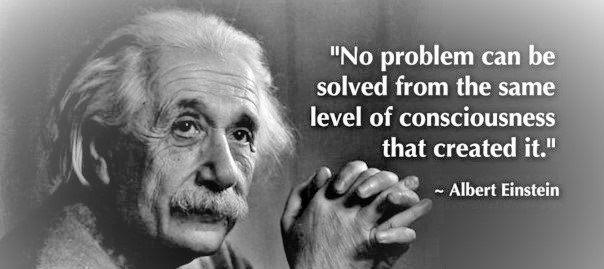
Today’s increasingly dynamic and fast paced business environment demands a consciousness that is not habit bound, sees the world in new ways, and goes beyond the known. Business has long recognized and placed premium value on the relationship of open-mindedness and creativity to competitive advantage as it strives for continuous improvement, invention of “disruptive” technologies and development of “out-of-box” solutions. Yet, many companies and individuals appear stuck, doing things in the same way and wondering why they do not turn out differently. My friend and mentor Dick Eppel likes to quote “All organizations are perfectly designed to get the results they are now getting. If we want different results, we must change the way we do things.” Makes sense, and to change the way we do things, I contend we have to first must occur a change in our minds (and then a change the design). To paraphrase the wisdom of Albert Einstein: “Problems cannot be solved with the same level of awareness and thinking (i.e. consciousness) that created them.”
If you are having a hard time with the word consciousness, try using the word “mindset”. They are closely related. The foundation of consciousness is awareness while mindset is the set of beliefs and way of thinking that that steers attitude, outlook, behavior and, ultimately, outcome. Mindset is also influenced by emotional states and informed by values. You might say mindset is the edifice that sits on (and colors) awareness.
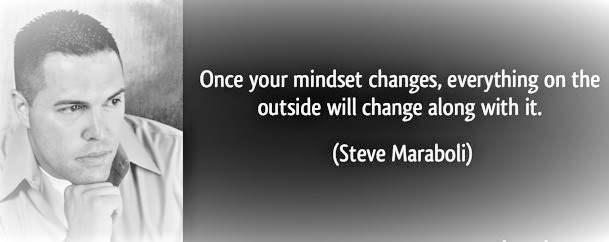
It is not too much of stretch to say that consciousness and mindset are the genesis of all innovation; and that innovation is the quintessential basis of competitive advantage. Innovation (creativity) comes from open, receptive minds untethered from convention and perceived limitations. This is just one aspect and example of how consciousness is integral to gaining competitive advantage. Following posts will explore how consciousness operates and the various different ways it can and does directly impact competitive advantage.
 Awareness Into Action